Group Flashcards by a Practical Context
Organize cards around situations and tasks so a deck remains easy to select, review and maintain.
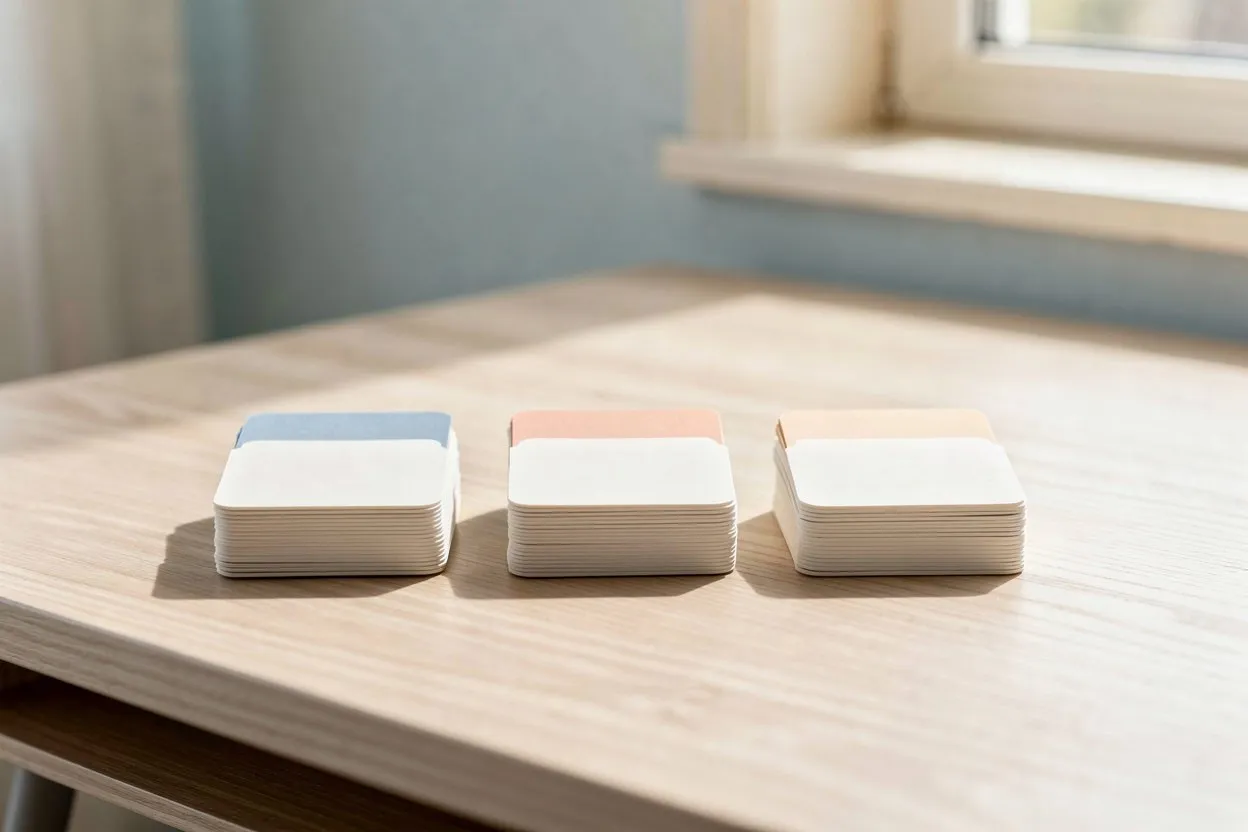
A deck is a practical container for related cards. Its name should help you decide when to open it and what kind of practice to expect. Grouping by a useful context can be more manageable than placing every word you encounter into one large collection. The best grouping is one that supports your own activities without requiring constant reorganization.
Start with a small number of meaningful groups
Choose broad enough contexts to hold several cards but narrow enough to describe a real purpose. Examples might include discussing a project, reading a particular topic or handling everyday arrangements. These are personal organizing choices, not a universal curriculum.
Avoid creating a new deck for every single word. Many tiny groups can make review selection more complicated than the cards themselves. If two groups are usually practiced together and have no useful distinction, consider whether they should share a container.
Give the deck a clear name
Use a name you will understand later without reconstructing the circumstances in which it was created. Useful work phrases is clearer than new words two if it accurately describes the contents. Add a brief date or source reference only when it helps distinguish similar projects.
In the card library, check that new cards are assigned to the intended group before moving on. A card saved in the wrong place can seem missing during review even though the text is still present in the library.
Keep each card independently understandable
Grouping should not become a substitute for a clear prompt. A card in a travel-related deck may still need to specify the situation it asks about. When you review after a break, the deck name alone may not supply enough context to identify the intended answer.
Likewise, avoid duplicating the same card into several groups merely because the word could be used in many settings. If the contexts test genuinely different meanings or tasks, separate cards may be useful. If they ask the same thing, duplication can create more maintenance without adding a new practice goal.
Review groups according to current use
Use review cards to practice a group that relates to something you are reading or preparing to do. Afterward, inspect cards that felt irrelevant or confusing. You may need to move a card, rewrite it or set the whole group aside while your priorities change.
There is no requirement to keep every deck equally active. A completed short-term project can remain as a reference or be removed after you retain any notes you need. Remember that these records stay in the current browser or app installation. Before clearing data or changing devices, keep a separate copy of any collection you want to preserve. An organized deck should make the next session easier to begin, not become another large system you feel obliged to manage.