Start a Review Session Small Enough to Finish
Choose a manageable set of cards, define the task and finish with a small amount of useful feedback.

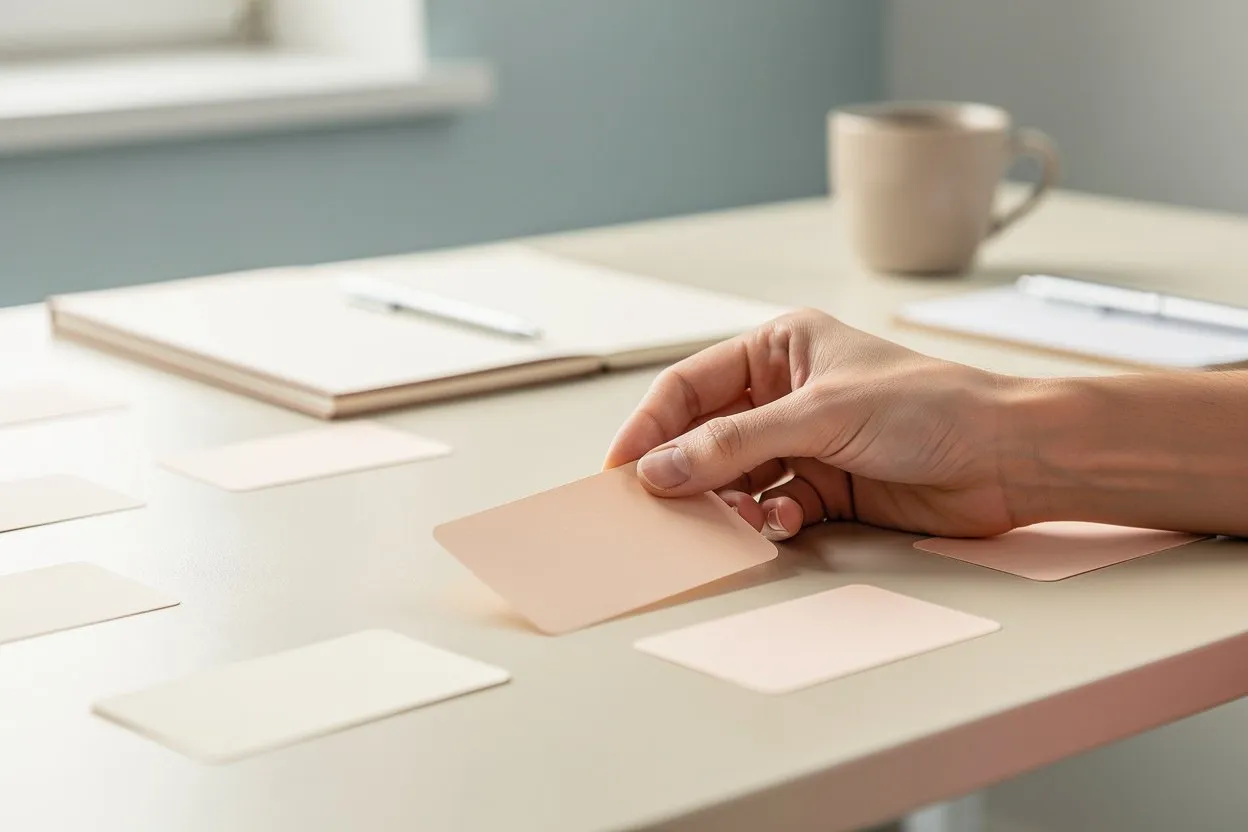
A review session does not need to cover an entire collection to be useful as practice. A short, clearly defined session can fit into an ordinary day and leave you with specific notes about what needs attention. Decide what you are practicing before opening the first card. The goal is to complete a manageable task, not to produce an impressive-looking session count.
Choose a group with a current purpose
Select cards related to something you are using, reading or preparing to discuss. A practical connection makes it easier to judge whether the prompts are worth keeping. You can use the card library to inspect the group before starting if its contents are unfamiliar.
Pick a small set that fits the time and attention available. There is no single required session length. If you only have a few minutes, choose fewer cards rather than rushing through a much larger group without attempting the answers.
Decide how you will answer
Read each front and produce an answer before revealing the back. Depending on the card, that might mean saying a phrase, writing a brief response or forming an example sentence. Choose a method that fits the setting and the skill you want to practice.
Avoid silently changing the standard between cards. If one prompt asks for an approximate meaning and another asks for an exact form, recognize that distinction explicitly. The review labels are most useful when they reflect what the card actually asks rather than a general feeling of familiarity.
Keep the interaction simple
Open review cards, reveal the answer when ready and use the available labels to indicate whether the card needs another attempt. Do not treat the labels as a formal test score or a scientific measurement of memory. They are personal controls for organizing the next practice step.
If a prompt is unclear, note it for editing instead of spending most of the session trying to interpret it. If an answer seems questionable, verify it before repeatedly practicing that version. A short session should not force you to ignore obvious problems in the material.
End with one useful adjustment
At the end, review the cards that caused confusion. Choose a small action: rewrite one overloaded prompt, check a doubtful example or move an unrelated card to a better group. You do not need to redesign the entire collection after every session.
Record important observations in a place you can find again. This website keeps records locally, so another device will not automatically show the same review state. If you are interrupted, return through the same browser and check the displayed state rather than assuming a session is synchronized elsewhere. A completed session should leave the next one slightly easier to begin, with clear prompts and a realistic sense of what still needs practice.